Plan
Turn standards, time limits, and student context into a realistic lesson outline.
The classroom track
Practical AI help from one teacher to another: fewer buzzwords, more finished work, and enough professional judgment to keep you in charge.
 Teacher first. AI assistant second.
Start with what you need
Practice the five ingredients that turn a vague request into a useful AI brief.
Open the lab →02Grab teacher-ready guides and handouts you can keep or share with a colleague.
Browse resources →03See the small set of flexible AI platforms and features actually worth learning.
See favorite tools →Classroom workflows
Keep relationships, creativity, and final judgment human. Use AI to help with the first draft, the blank page, and the repetitive work around them.
Turn standards, time limits, and student context into a realistic lesson outline.
Create scaffolds, examples, alternate reading levels, or extra practice without starting over.
Draft clear family emails, directions, rubrics, and feedback in your own voice.
Build discussion prompts, scenarios, rehearsal materials, visuals, and classroom examples.
From the classroom
 AI literacy
If we want teachers to raise confident, capable AI users, teachers need the freedom to discover what AI can do in their own lives first.
Read the article →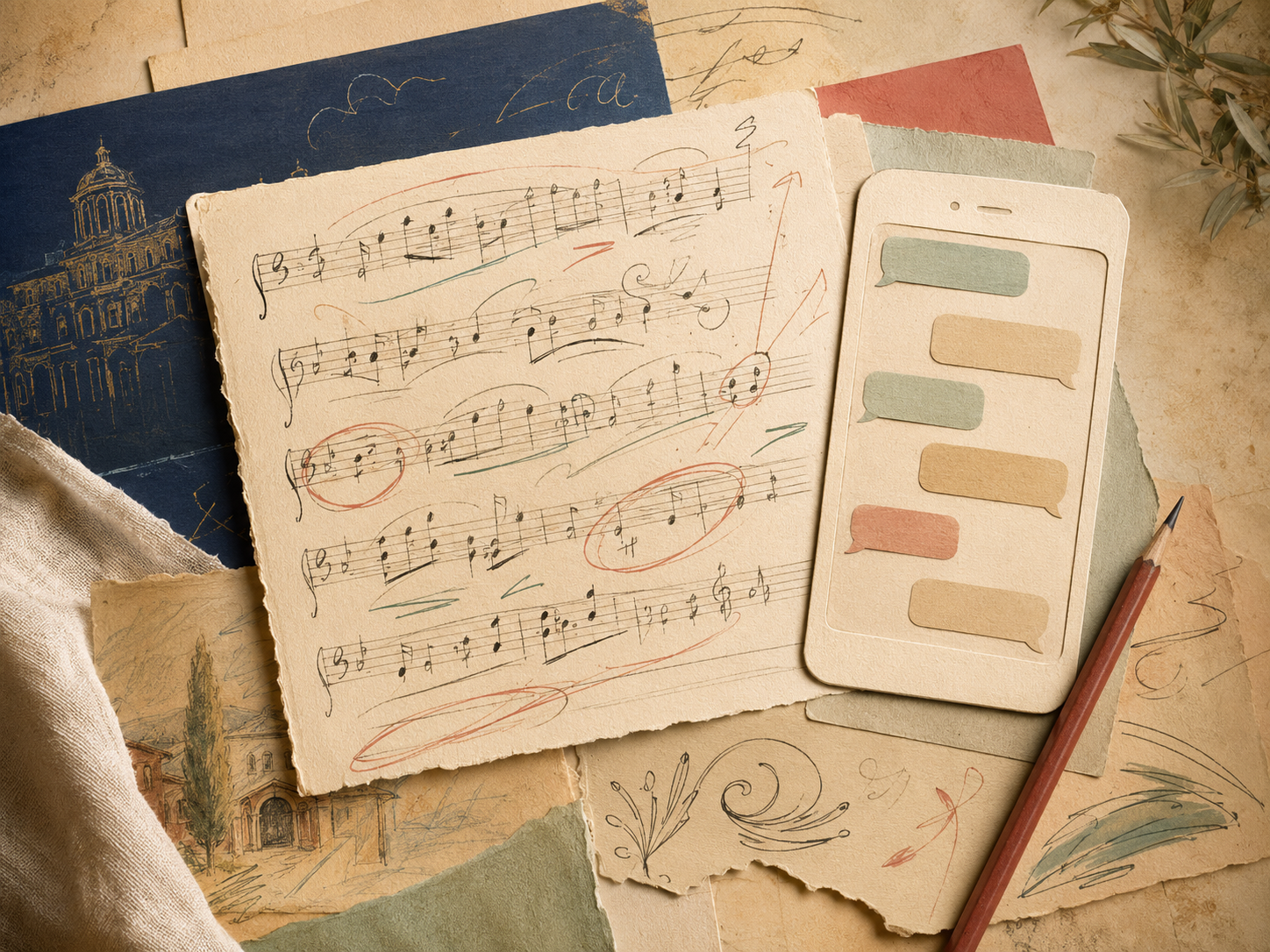 Classroom story
How a modern text-thread analogy helped a student find the emotional core of an Italian art song.
Read the article →Too many specialized tools can create friction. A clear conversation with the AI you already use is often faster.
Read the article →A small, capable toolbox