From 18th-Century Italy to “Left on Read”
Humanizing art songs with AI
A student stands at the piano, fully prepared for an audition. Notes are correct. Diction is solid. Dynamics are marked. And yet nothing is happening behind the eyes.
They’re singing the piece, but they’re not in the piece.
This happens a lot with standard art song repertoire. The music is beautiful, but the text can feel distant. An 18th-century poet lamenting a “languishing heart” doesn’t always connect with a teenager who just finished math homework and checked their phone.
During a private lesson, we tackled this head-on with Giordani’s “Caro Mio Ben.” To bridge the gap and find the emotional hook necessary for a competitive audition, we opened an AI chat. What happened next wasn’t AI magically solving the problem, but a back-and-forth that led us to the core of the music.
The collaborative translation process
We didn’t just ask for one translation. We used AI to peel back the layers of the song in stages:
The academic foundation
First, we established the baseline. AI provided a literal translation and thematic analysis, explaining that the song is a tender plea for affection and that the sweet performance markings contrast with the speaker’s inner distress. Good information, but still academic.
The slang “vibe check”
To loosen things up, I asked for a modern slang version. The dramatic language became something closer to “I’m actually losing it without you.” The student laughed, and the intimidation factor of the serious classical piece vanished.
The human spark and the AI deep dive
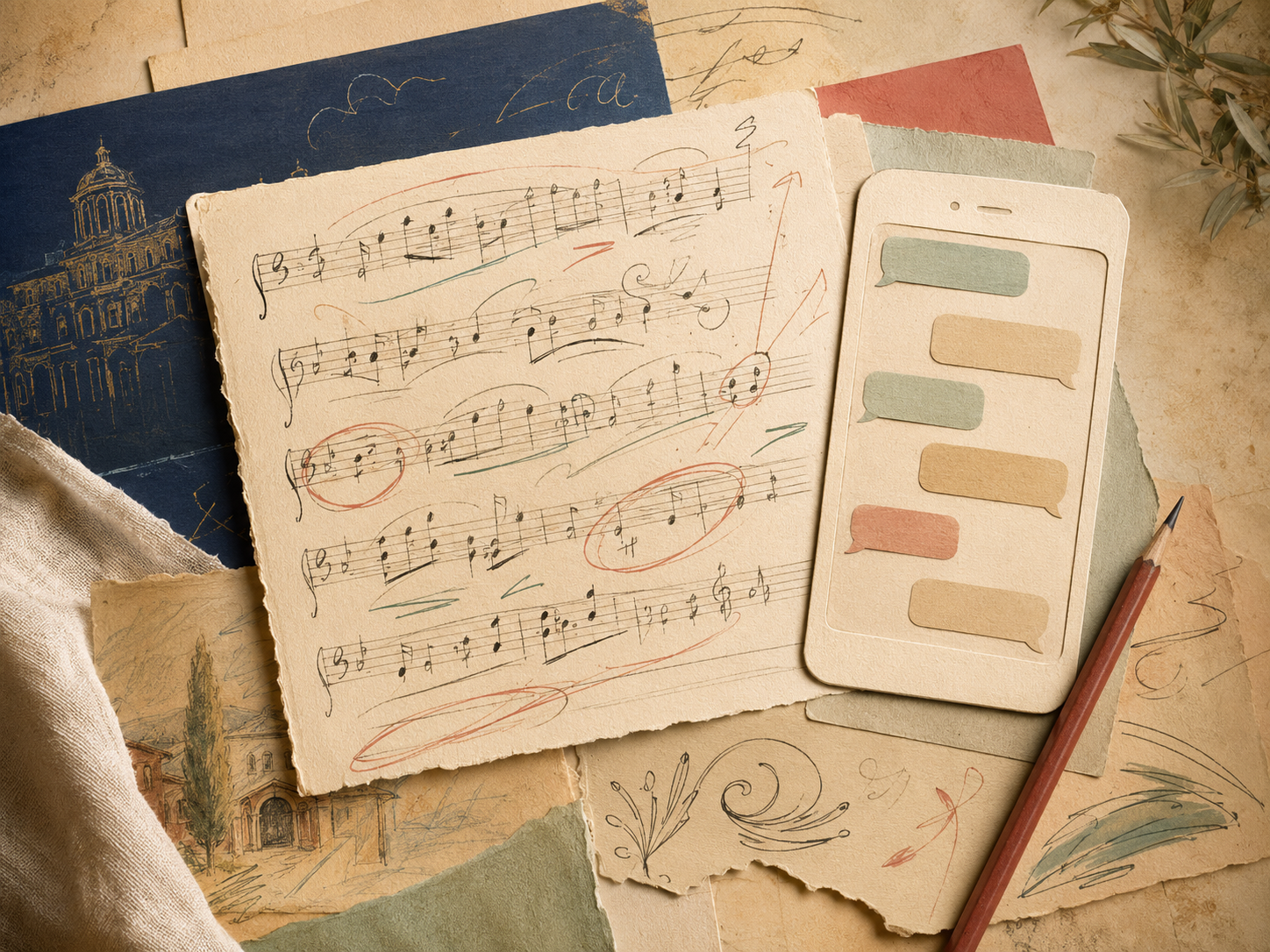
The slang translation sparked an idea in the room: if this song were a text thread, the singer would be staring at a read receipt with no reply for three days. AI then mapped that analogy onto the actual musical markings.
The music became a text thread
- The “delusional” phase, measures 1–4. Starting sweetly and softly is the singer trying to stay calm and act like everything is fine while still begging to be believed.
- The caps-lock moment. When the music grows louder and the singer cries “cessa, crudel,” it feels like sending a desperate “???” because the silence has become unbearable.
- The final acceptance. The drop to a final whisper is the moment the singer runs out of energy to keep fighting for a reply.
The “aha” moment
My student looked at the sheet music and said, “It’s funny, but I actually get it now.”
That laughter broke down the wall between the student and the seriousness of the classical genre. When they sang again, the phrasing was transformed. There was a genuine ache in the Italian vowels because they weren’t just singing about a “dear beloved.” They were singing about the universal gut-punch of seeing those three dots disappear without a reply.
Why this matters for audition preparation
- Authentic connection. Students can map complex historical emotions onto their own lived experiences, leading to a more convincing performance.
- Immediate engagement. It meets students where they are, using their language and digital culture as a bridge rather than a barrier.
- Efficiency. We found the soul of the piece in two minutes, leaving the rest of the lesson to polish technique with that new emotional energy.
AI isn’t here to replace the art. It can help students find their way into it. Sometimes the best way to help a student nail an audition is to look at an Italian master through the lens of a modern text thread.